

Clarity, Diligence, Confidentiality
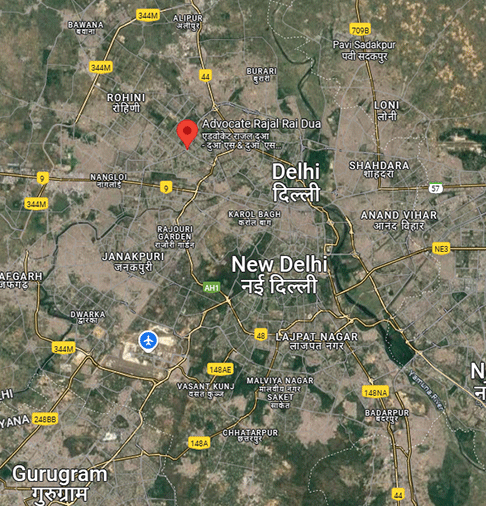
In family law, clear communication and thorough planning are vital. Advocate Rajal Rai Dua is a divorce lawyer in Delhi in practice since 2004. Since 2004, he has been registered with the Bar Council of Delhi, practicing extensively in local family courts, including Rohini, Tis Hazari, Saket and Patiala House courts and the Delhi High Court. our law firm focuses on lawful separation, custody planning and dispute resolution. Dua's & Dua's Advocates and Consultants provide end-to-end legal support, from filing petitions to court hearings - ensuring reliable, positive outcomes through a deep understanding of Indian Family Law. Reach out today for legal guidance in marital disputes.

Clarity, Diligence, Confidentiality
Each matter is managed with precision, clarity and a tailored legal approach, guaranteeing each client's privacy.
Due to his frequent appearances in local family courts, Advocate Rajal Rai Dua is well-versed in the legal system.
More than a legal issue, divorce is an emotional matter. His tough yet kind advice offers support during difficult times.
Clarity, Diligence, Confidentiality
Managing family conflicts requires more than just legal expertise. It also needs compassion and understanding. At Dua's & Dua's Advocates & Consultants, advocate Rajal Rai Dua has been in practice since 2004 as a family lawyer in addressing family conflicts. He focuses on different family law matters, from spousal support to guardianship matters. Since disagreements between families can be stressful, he places a high value on sensitive advice and open communication to make sure clients feel supported during the court proceedings. Consult with our family advocate for legal clarity and emotional assurance during your toughest transitions in life.

Grounds, Statutes, Evidence, Strategy
Every divorce lawyer in Delhi handling a petition must build the case on specific grounds recognized under the applicable personal law, since courts require valid legal reasoning before granting any separation. These laws vary by religion and common grounds include cruelty, desertion, adultery and mutual consent, while rarer grounds include conversion or unsound mind. Cases involving cruelty linked to dowry demands often fall under Section 498A IPC and the Dowry Prohibition Act. Selecting the correct ground matters greatly, as it shapes how the petition is drafted and how long the case takes. Advocate Rajal Rai Dua reviews each case to identify the strongest ground before filing.
Statutes, Religion, Procedure, Guidance
Marriage and divorce matters across India are governed by personal laws that differ based on religion, since no single civil code applies uniformly across all communities in the country. Hindus, Buddhists, Jains and Sikhs follow the Hindu Marriage Act, while Muslim marriages are governed separately under Muslim Personal Law with entirely distinct procedures. Christian couples proceed under the Indian Divorce Act, while inter-faith or civil marriages are handled instead under the Special Marriage Act rather than religious personal laws. Advocate Rajal Rai Dua guides clients through whichever law applies to their specific marriage, ensuring the petition meets every procedural requirement properly from the outset.

Protect, Register, Enforce, Innovate

Mutual, Contested, Cross-Border Cases
Every divorce lawyer in Delhi sees cases that fall under mutual consent or become contested when spouses disagree on key terms.
Both spouses agree on all terms and file jointly, with a mandatory six-month cooling-off period before the final decree.
One spouse disputes the marriage's end or its terms, requiring evidence, witnesses and several court hearings.
Cases involving a spouse settled abroad, handled with added procedural care for jurisdiction and coordination across borders.
Paperwork, Proof, Preparation, Support
Filing a divorce case requires several documents ready well in advance for the court. Advocate Rajal Rai Dua asks clients for the marriage certificate as official proof of registration, submitted along with the petition. Identity and address proof such as Aadhaar, passport or voter ID confirms both parties' details for the court record. Income records including salary slips or income tax returns become necessary when alimony claims are involved in the case. Marriage photographs may also be requested by the court as supporting evidence of the ceremony. Our law firm helps clients gather these documents early, avoiding delays once the petition moves forward in family court.

Physical Custody, Legal Custody, Care
In every divorce case, child custody decisions focus on the child's safety and long-term well-being rather than either parent's convenience. Physical custody determines which parent the child primarily lives with and courts may grant this jointly or solely depending on the family's circumstances. Legal custody, on the other hand, covers major decisions about the child's education, health and upbringing and can also be shared or given to one parent alone. A divorce lawyer in Delhi helps parents present their case clearly, ensuring the court sees a genuine, caring approach to the child's future. Advocate Rajal Rai Dua guides clients through custody arrangements that protect both the child's interests and the parent's rights.
Call Any Time
Experience, Integrity, Legal practice
Dealing with divorce as a Non-Resident Indian can be emotionally tough when two legal systems are involved. Many NRIs struggle to attend court hearings in person and understand the paperwork required under Indian jurisdiction. Advocate Rajal Rai Dua, an advocate for NRI divorce matters, understands these challenges well and offers strategic advice suited for clients living abroad. With years of experience in international divorce cases, he guides clients through every step, coordinates with international authorities and represents clients in Indian courts. He makes sure distance does not stop clients from getting justice. At Dua's & Dua's Advocates & Consultants, every NRI client gets full attention and practical help.
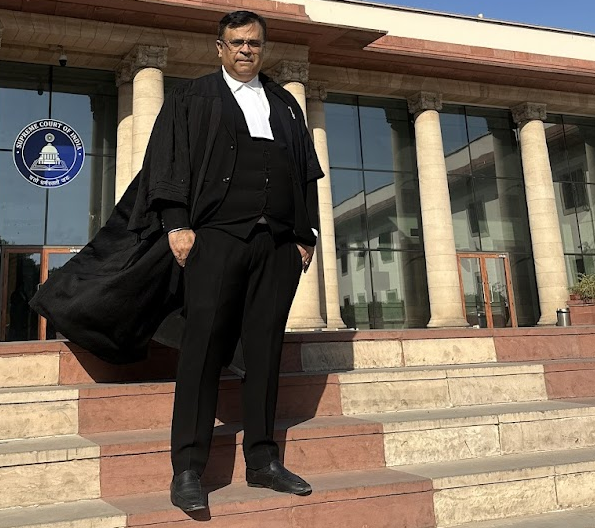
Divorce proceedings in the High Court often involve serious legal challenges, from appeals and complex evidence to constitutional rights. Advocate Rajal Rai Dua is a High Court divorce lawyer, bringing a clear and strategic approach to address each case carefully. Known for his strong presence in court and detailed preparation, he works hard to serve his clients with honesty and focus. His ability to handle delicate family cases at a higher level ensures clients get good support while also considering the emotional side of family disputes. Contact our law firm at Dua's & Dua's Advocates & Consultants, every case is handled with the care and attention it needs.
Guiding You with Clarity
Advocate Rajal Rai Dua, a Supreme Court divorce lawyer in Delhi, focuses on handling complex divorce cases with deep legal insights, ensuring the petitions are filed properly. The legal processes include:

Guided, Prepared, Argued, Resolved

1
Our Advocate Rajal Rai Dua listens to the client's concern, provides legal advice and drafts a divorce petition.

2
The court examines whether the request is mutual or contested and validates adherence to legal criteria.

3
He ensures the smooth execution of the court's decision and guides towards legal closure with dignity.
Clarity, Diligence, Confidentiality
Splitting assets and property during divorce cases can be very difficult and emotional. Our advocate Rajal Rai Dua understands that every family's financial situation is different, so he approaches asset division fairly and equally to meet the client's demands. It includes all marital assets such as land property, investments and shared belongings. Clients feel confident and well-informed with the support of advocate Rajal Rai Dua, making it easier for them to handle a tough time. Contact Dua's & Dua's Advocates & Consultants, our law firm in Delhi, for getting legal advice to protect their financial interests in asset division.

FAQ
Advocate Rajal Rai Dua provides practical advice on handling legal cases from mutual agreements to complicated disputes. This makes him a good choice for addressing divorce cases in Delhi.
Our law firm offers seamless communication and representation for clients residing abroad, ensuring all legal formalities are managed efficiently without requiring frequent travel.
Divorce case duration depends on the nature, legal procedures and also court availability and timing vary per case.
We offer legal support for divorce litigation, child custody, alimony, asset settlement and domestic violence.
Under Section 13B of the Hindu Marriage Act a mutual consent divorce requires two motions separated by a statutory six month period. In the Delhi family courts most mutual petitions conclude in about six to eighteen months, depending on the court's workload and whether the settlement terms are already agreed between the parties.
Yes. In Amardeep Singh v. Harveen Kaur (2017) the Supreme Court held that the six month period under Section 13B(2) is directory and not mandatory. A family court may waive it where the parties have already lived separately for at least eighteen months, every dispute including alimony and custody has been settled, and there is no prospect of reconciliation.
Section 13 of the Hindu Marriage Act permits a contested petition on grounds that include cruelty, desertion for two years or more, adultery, conversion to another religion, unsoundness of mind, renunciation of the world and presumption of death. Comparable grounds exist under the Special Marriage Act, the Indian Divorce Act and Muslim personal law.
Yes. Interim maintenance and litigation expenses may be sought under Section 24 of the Hindu Marriage Act and permanent alimony under Section 25. Independent claims are also available under Section 125 of the Code of Criminal Procedure and under the Protection of Women from Domestic Violence Act, 2005. The court weighs the income, assets, conduct and reasonable needs of both spouses.
Custody is decided on the welfare of the child, which the courts treat as the paramount consideration under the Guardians and Wards Act, 1890 and the Hindu Minority and Guardianship Act, 1956. Custody may be physical, legal, joint or sole. A child below the age of five is ordinarily placed with the mother, though the court retains discretion in every case.
A petition generally requires the marriage certificate or other proof of marriage, wedding photographs, identity and address proof of both parties, income tax returns or salary slips where maintenance is claimed, details of assets and liabilities, and evidence supporting the ground pleaded. A mutual consent petition also needs the signed settlement terms.
Related Guides





Appointment
The Bar Council of India does not permit advocates to solicit work or advertise. By clicking “I agree”, you acknowledge that:
Rajal Rai Dua, Advocate · Bar Council of Delhi · Enrolment No. D/1003/2004